

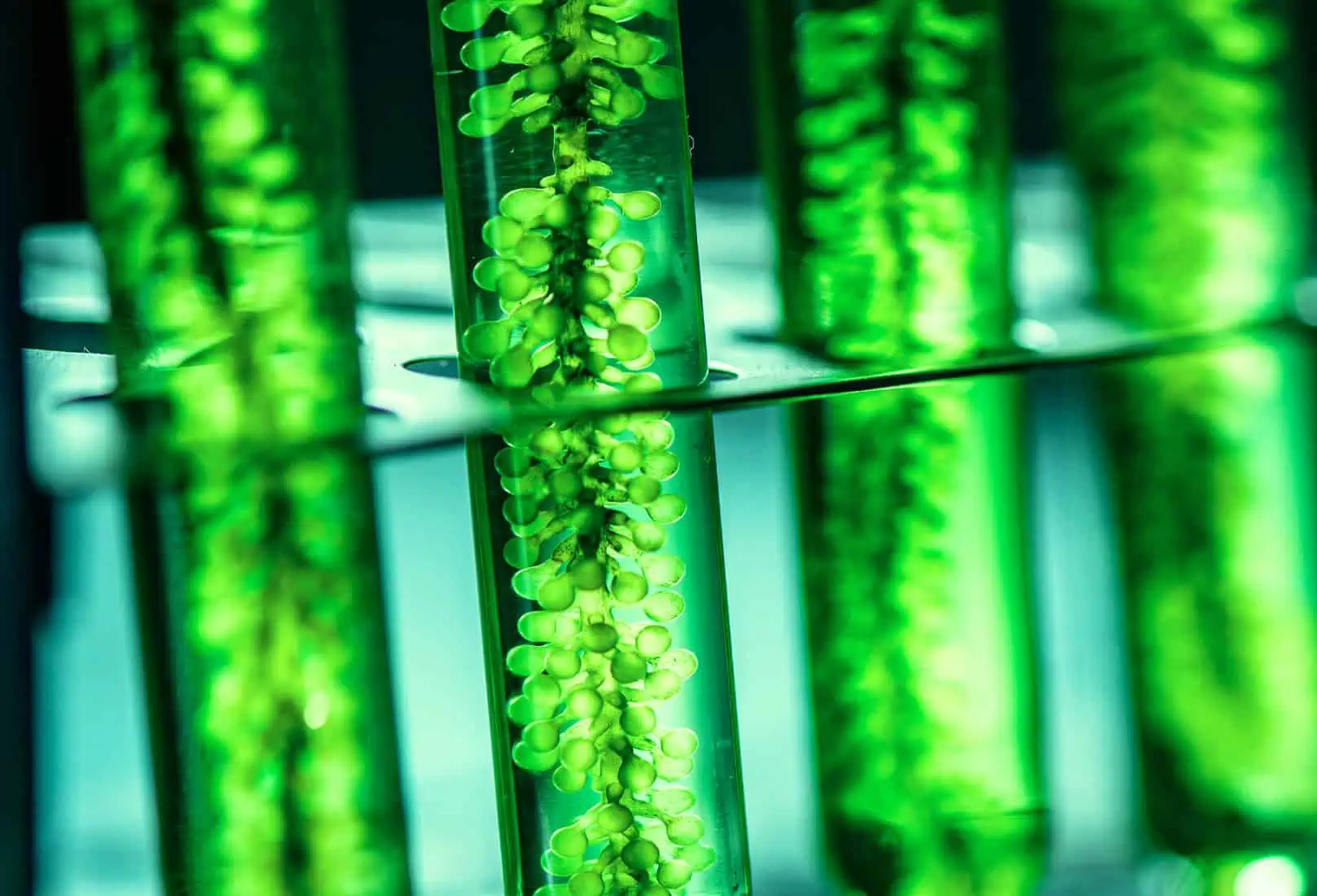
Nature’s Collagen: Why Microalgae Matters for Skin Resilience
Microalgae collagen skincare represents a new approach to supporting skin resilience without relying on animal-derived collagen. Collagen has long been positioned as the gold standard of pro-ageing skincare. But as demand for collagen continues to rise, so do questions around sourcing, sustainability and long-term impact both on the planet and on the skin.
Traditionally, collagen used in skincare is derived from animal by-products, including bovine, porcine and marine sources. While often described as a secondary output of the meat industry, collagen production remains largely unregulated and is not currently included in key environmental due-diligence frameworks in the UK or EU. As awareness grows, skincare is beginning to look elsewhere not to replace collagen itself, but to support the skin’s natural collagen mechanisms more intelligently.
This is where microalgae comes in. Unlike topical collagen, microalgae collagen skincare focuses on hydration, barrier health and supporting the skin’s natural collagen processes.
What microalgae actually is and why it matters
Microalgae are microscopic, photosynthetic organisms found in both salt and freshwater environments. They are among the most ancient life forms on Earth and are responsible for producing over half of the planet’s oxygen. From a skincare perspective, microalgae are remarkable because they are naturally rich in:
-
amino acids
-
minerals and trace elements
-
antioxidants
-
peptides and bioactive compounds
These components are fundamental to skin structure, hydration and barrier function. Unlike topical collagen, which sits on the surface of the skin, microalgae supports the conditions in which collagen production and skin regeneration can function optimally.
Supporting collagen, not forcing it
Collagen in skincare is often misunderstood. Applied collagen molecules are too large to penetrate the skin. Their role is primarily surface-level hydration. What truly influences collagen health happens deeper through hydration, barrier integrity and reduced inflammation. Microalgae works here. Certain microalgae species produce collagen-like proteins and bioactive peptides that help:
-
support elasticity
-
improve skin tone and texture
-
protect against oxidative stress
-
reinforce the skin barrier
This makes microalgae particularly relevant for pro-ageing skincare, where the goal is resilience rather than stimulation.
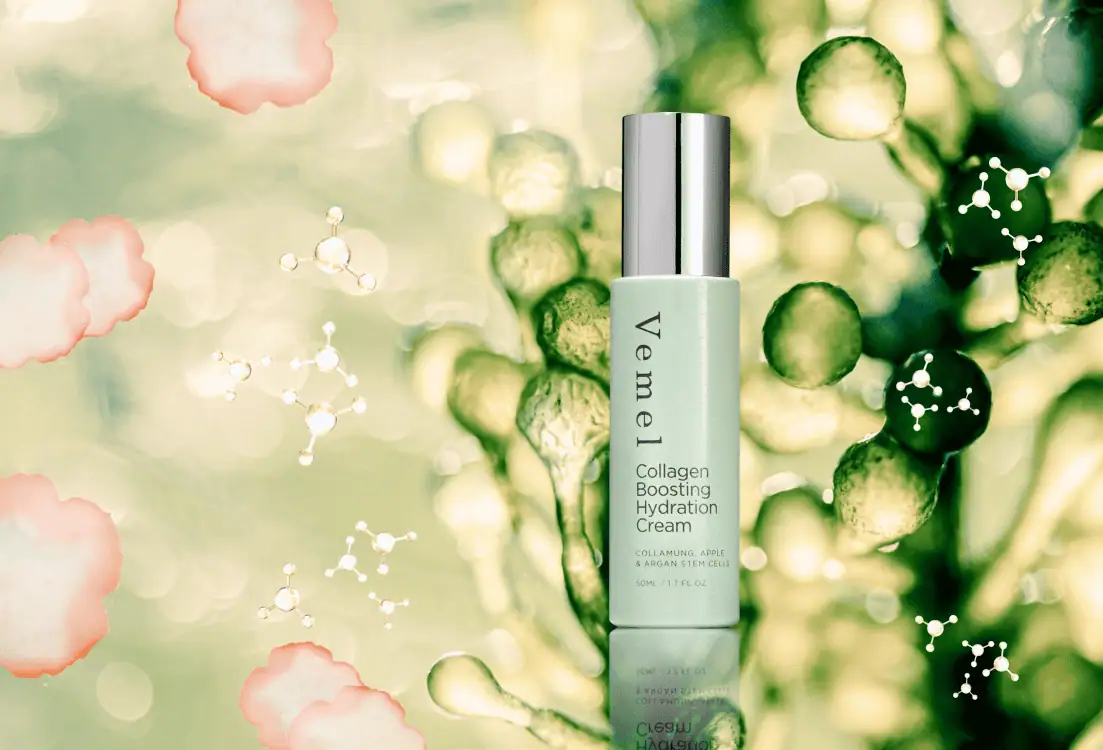
Hydration, barrier health and long-term glow
Collagen thrives in hydrated, stable environments.
Microalgae naturally function as humectants, helping the skin attract and retain moisture. At the same time, algae bio-actives, featured in our Biome Active Essence, have been shown to reduce transepidermal water loss (TEWL), supporting long-term hydration rather than temporary plumping. When hydration and barrier function are supported together:
-
fine lines appear softer
-
skin texture becomes more even
-
radiance improves naturally
This is why algae-derived ingredients are increasingly used in skincare formulated for sensitive, hormonally changing and environmentally stressed skin.
Sustainability without compromise
From an environmental perspective, microalgae cultivation is exceptionally efficient. Microalgae require:
-
no arable land
-
minimal water
-
no animal input
At Vemel, we work with sustainably cultivated algae bio-actives, including wild strains sourced from alpine lakes in the Pyrenees and lab-cultivated microalgae grown in purified water to ensure consistency, purity and performance. Many of these algae ingredients are independently clinically studied not as finished formulas, but as raw actives, aligning with our commitment to transparency and evidence-led formulation.
Why this matters for organic, waterless skincare
Microalgae fits naturally within organic and waterless skincare philosophies.
Because algae bio-actives are highly concentrated, they work effectively in waterless formulations that:
-
avoid unnecessary fillers
-
reduce preservative dependency
-
respect compromised skin barriers
This makes them particularly suitable for sensitive and pro-ageing skin, where tolerance and long-term skin health matter more than aggressive correction.
The bigger picture
Microalgae collagen in skincare is not a trend ingredient. It offers a scientifically grounded, sustainable path forward for pro-ageing and sensitive skin.
It represents a shift in how skincare approaches ageing away from forcing visible change, and toward supporting the biological systems that allow skin to remain resilient over time. When skincare is formulated with ingredients that respect both skin and environment, performance and ethics no longer sit in opposition.